Greco group heat generators for grain dryers — how a small plant meets the needs of farmers throughout the country
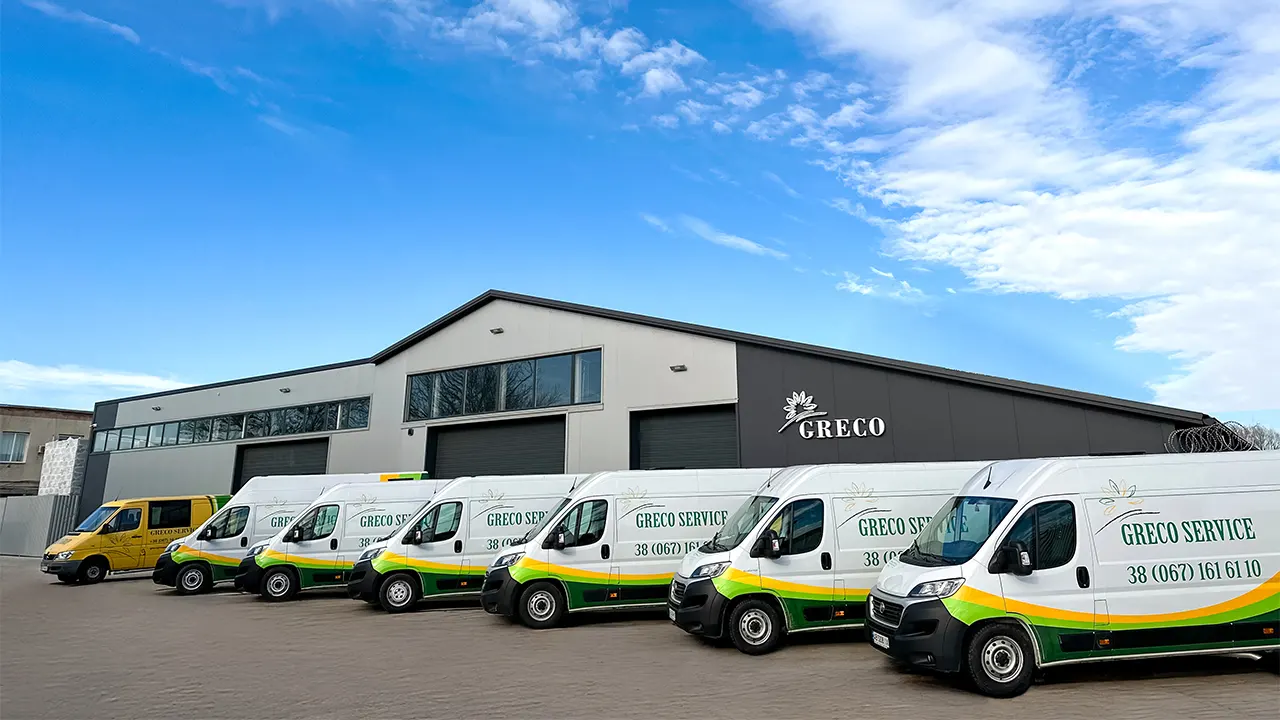
Heat generators from the Ukrainian manufacturer Greco group can be found at many elevators throughout the country - they are willingly placed on dryers by both farms and large agricultural holdings. Last year alone, more than 100 new units were installed at granaries. It seems that in order to provide such a large number of heat generators, a huge, powerful plant must be produced.
We visited the production of Greco group, where we were told how a rather small plant can effectively meet the needs of farmers in heat generators, and what the efficiency of the enterprise is based on. They saw with their own eyes the work of production masters and the equipment they work on.
The first place we visited at the factory was the warehouse for materials and spare parts. Indeed, according to Ivan Korzhenko, director and owner of the Greco Group, the warehouse is the main starting point for production.
«Production starts in the warehouse, where there must be a full stock of assemblies, components, parts and consumables, and it is essential to have reserves. This is particularly important now, as there is a war on and supply disruptions are occurring; however, in our view, this should not affect the customer. The primary task for any manufacturer at present is to eliminate all areas of risk by any means necessary. “In our case, we always have a large stock of the necessary materials and parts,” says Ivan Korzhenko.
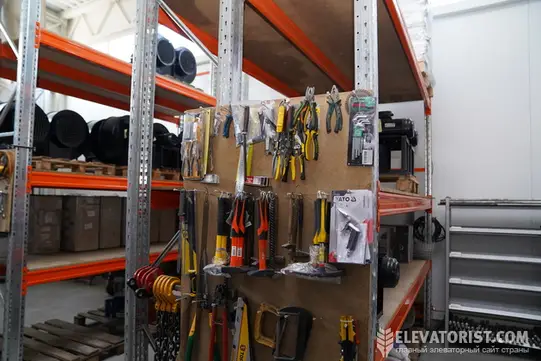
The factory has two warehouses: a service warehouse and a production warehouse. The production warehouse holds consumables, components, electronics, and everything else used in manufacturing. The service warehouse holds a separate stock to meet the needs of existing customers, so that they do not have to wait in the event of an emergency.
«“Our top priority is servicing existing contracts. After all, our customers dry grain every season, and we need to ensure that their heat generators operate reliably,” says Ivan Korzhenko.
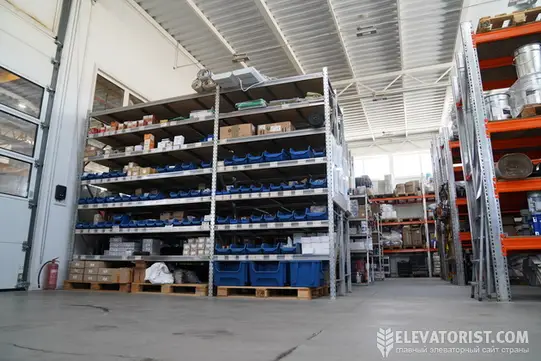
That is why there are always stocks in the warehouse. Especially since there have been some difficulties with the supply of materials since the start of the war, and this foresight has been a great help to the Greco Group; contract deadlines have never been missed. Ivan Korzhenko says, ‘Adherence to deadlines is one of the hallmarks of the company’s work; if a contract stipulates a 40-day completion period, then exactly 40 days later a new heat generator will be installed at the customer’s grain silo.’
‘In manufacturing, everything depends on the manufacturer’s willingness, not on external factors. If a tap breaks, we can find another one; if the lorry hasn’t arrived for loading, we’ll find a more expensive one. We believe that when manufacturers say ‘they didn’t deliver to us’, ‘they didn’t make it in time’, ‘the power went out’, or anything else — these are just excuses,” says the manager.
So, for example, there are 10 control panels in stock, because if something goes wrong with the heat generator’s electronics, it is easier—and, more importantly, quicker—to replace the entire unit than to spend a week dismantling it and trying to find the cause of the fault. A day of downtime costs a farmer a great deal of money, and the factory does everything it can to avoid such situations.
“If the cause of the fault is minor—say, a switch costing 600 hryvnias—then the entire switchboard assembly is replaced. This saves time and significantly reduces logistics costs. For customers, any loss of time—even half a day—is significant,” explains Ivan Korzhenko.
All Greco Group heat generators – whether 3 MW or 20 MW – are built using the same gear motors and spare parts. The product range is extensive, with 12 different power ratings, so it is simply not feasible to keep spare parts for every single power rating in stock.
«This is called standardisation; we work in batches. For example, last year one of the agricultural companies ordered 10 identical heat generators from us. “If we were making exclusive products, we’d have 320 exclusive heat generators across the country, and we’d have to employ 320 exclusive service engineers to maintain them,” explains the company’s director.
In the operation of grain elevators, everything hinges on time and the speed at which work is carried out. That is why the GREСO group uses high-quality spare parts for its heat generators: these parts are sourced from Germany and Italy. The metal used in production is sourced from Ukraine.
“We don’t use cheap spare parts. It’s better to fit a high-quality gear motor or fan; experience shows that cheap parts end up costing three times as much, as you have to buy them three times and service them three times. High-quality spare parts are easier to work with, and they result in fewer warranty call-outs and fewer production stoppages,” says Ivan Korzhenko.
It is precisely standardisation and mass production that enable the GREСO group to operate efficiently and deliver its products on time, or even ahead of schedule. The company believes that there should be no critical delivery deadlines in the grain storage business. The market values this approach, so the customer base is growing every year. In turn, high sales volumes allowed the GREСO group in 2023 not only to avoid raising prices for its products, but even to lower them slightly.
“We’ve lowered our prices. Why did we do this? Because times are tough in the country, and we don’t believe in raising our prices, even in light of the energy crisis. We are also working with customers this year on deferred payments. For example, if they buy equipment from us that pays for itself in a single season, we can defer payment until winter,” says the owner.
Ivan Korzhenko assures us that, as experience has shown, everyone gets their money’s worth. And this approach benefits both parties: the factory itself, and the customer, who does not have to find the funds to purchase equipment from an already stretched budget.
If a customer wishes to purchase the latest version of the heat generator, GREСO group will inform them that there is no latest version and there never will be. This is because, every year, the factory produces test versions of the equipment in consultation with customers. This year, there have already been seven such versions.
“As experience has shown, theoretical calculations and practical work are two different things. The latest version of the heat generator will be installed in July at the Ukrprominvest grain elevator. This is currently the top-of-the-range model, taking into account all the customers’ preferences and technical requirements,” says Ivan Korzhenko.
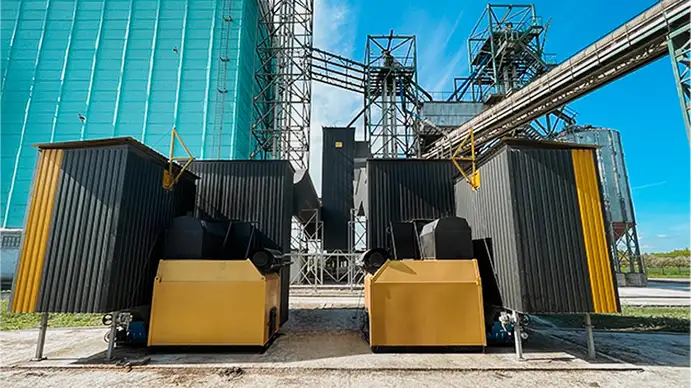
A 12 MW heat generator will be installed on the LAW dryer. Another dryer with a heat generator of the same capacity is already in operation at the Ukrprominvest grain elevator, but the new equipment will be customised to the customer’s specifications. As agreed with the LAW manufacturers, the electronic control systems for the dryer and the heat generator will be fully integrated: an additional, more sophisticated safety system will be installed to cope with sudden power cuts. In addition, the heat generator will be fitted with a dust suppression system.
“We are installing the latest automation system. Whereas previously we received two or three different signals from the dryer, such as ‘start-stop’ and temperature rise, we will now receive all signals. We have upgraded the automation system for our heat generators; it is versatile and can be integrated into any dryer,” explains Ivan Korzhenko.
The GREСO group’s design department develops innovations based on customer requests. Sergey Lutchenko, a design engineer, works there. He is responsible for all the improvements made to the company’s products.
“If a client suggests an additional solution, we’ll definitely implement it. And if it proves successful and effective after a one-year trial period, the innovation will be rolled out across all sites immediately. Our clients quite often suggest ideas – small ones, but every little detail matters. After all, complex things are made up of small, simple things,” smiles Serhiy Lutchenko.
Therefore, the standard specification for a heat generator at GREСO group is considered to be above average. If a customer wishes to purchase a cheaper version of the equipment, the design is simplified. The factory supplies the basic specification to small-scale farmers with up to 4,000 tonnes of maize. Agricultural holdings are supplied with the basic and top-of-the-range models, and more often than not, once the first heat generator has been installed at large grain silos, the rest of the dryers in the chain are retrofitted within three years. This is exactly what happened at the ‘Ukrprominvest’ ‘Zelena Dolyna’ grain storage facility.
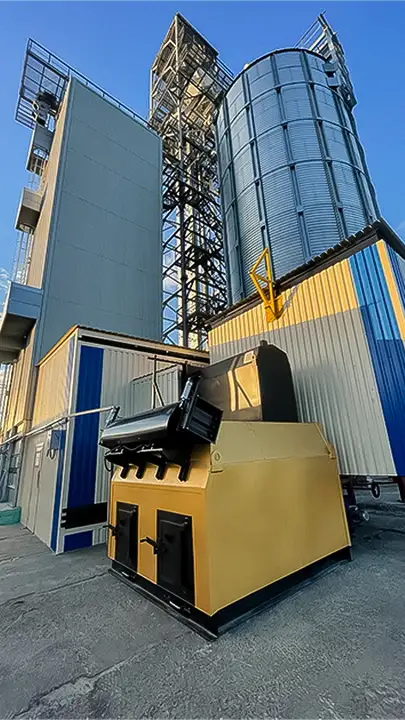
The GREСO group’s production facilities consist of a single workshop, which is integrated with warehouses and outdoor storage areas for finished products. This compact layout enables full control over production, quality and equipment manufacturing times.
As production is carried out on a batch basis, once an order is received and entered into the internal database, the software automatically generates a list of the specific tasks required for that order. The necessary parts are manufactured on our own machinery.
‘As soon as an order comes in, we only manufacture certain customised components for it, such as air ducts. Subsequently, the production team simply finishes off and stocks the ready-made units. This significantly saves time on order fulfilment and allows us to work more efficiently. And if the contract specifies a 40-day lead time, we sometimes manage to complete it in 25,” says Ivan Korzhenko.
The compact layout of the production facilities also makes operations more efficient. According to the manager, the company previously operated from rented premises where all stages of production were very separate and located a considerable distance from one another. As a result, workers spent half the day walking between the warehouse and the workshops.
“We now operate on the reverse principle, with everything located in a single room. We’ve also cut out unnecessary red tape; our workers no longer need to fill in forms to collect materials from the warehouse. They simply take what they need first and then report back on it. Thanks to this system, the accounts department no longer has to perform the duties of a storekeeper. For example, if a welder needs electrodes, he’ll go to the warehouse and take them, and then write them off,” explains the manager.
The production process is overseen by the production workshop manager, Mykhailo Tkachenko. His workstation is located right here in the workshop, so he can monitor the processes at all times.
“I constantly monitor all production processes — which tasks are underway on the production line, which materials are to be used, and what each worker is doing. A welder must not be doing any other work; he has a specific task, and he must carry it out,” says Mykhailo Tkachenko.
With this approach, there must be a high level of discipline on the production floor, and staff must be carefully selected. After all, as Ivan Korzhenko believes, you cannot force someone to do something they have no heart for.
‘If you work efficiently, 70 specialists can do the work of 500. It all depends on the production conditions, the ease of the work, the absence of unnecessary internal logistics and excessive physical labour. It is not the worker who sweats it out on the job and wears his hands out who is valuable, but the one who uses his head to think about what needs to be done. And if he doesn’t use his head, then he is not a valuable employee, but merely a doer. We choose those who think, that’s all,” says Ivan Korzhenko.
So every single worker at the factory is valued and reliable. Ivan Korzhenko says he has always dreamed of building a company just like this, where everyone puts not only their effort but also a piece of their heart into their work. And looking at the GREСO group factory, it seems that his dream has come true in every way.